started early 2026. in private testing with a demo household.
building in public · family coordination
Today’s Magnet.
it’s live, so it earned the period.
Family coordination built for the way families actually work — complicated, loving, and spread across group chats.
by the numbers
started in Base44. hit the auth ceiling. rebuilt from scratch. the limitation became the lesson.
- started
- Early 2026
- status
- Live
- features shipped
- 15+
- auth model
- Row-level security
- migration
- Base44 → Next.js
- next milestone
- Native apps
that’s me and my husband, in the middle of both sides.
the whole design problem, in seven words.
not another group chat. a fridge.
Why it matters to me
My sister-in-law manages family coordination across two households from a divorce — sports schedules, birthday parties, cancellations, updates — all of it spread across multiple group chats, with the same information going to different people in different threads. My husband and I sit at the overlap of both family groups, which means we’re always the awkward relay station in the middle.
The problem wasn’t that people weren’t communicating. It was that the tools weren’t built for how families actually work. Group chats are flat. Family life is layered. Some things are for everyone, some things are only for one side, and some things are nobody’s business except the parents.
I kept thinking: there should be a place where the right information reaches the right people — without the two sides of the family ever having to cross unless they choose to. That’s what Today’s Magnet is. Not another group chat. A family fridge, where you put things that matter, and everyone who needs to see them can.
an event posted to “smith family” doesn’t cross to “martinez family” unless you want it to.
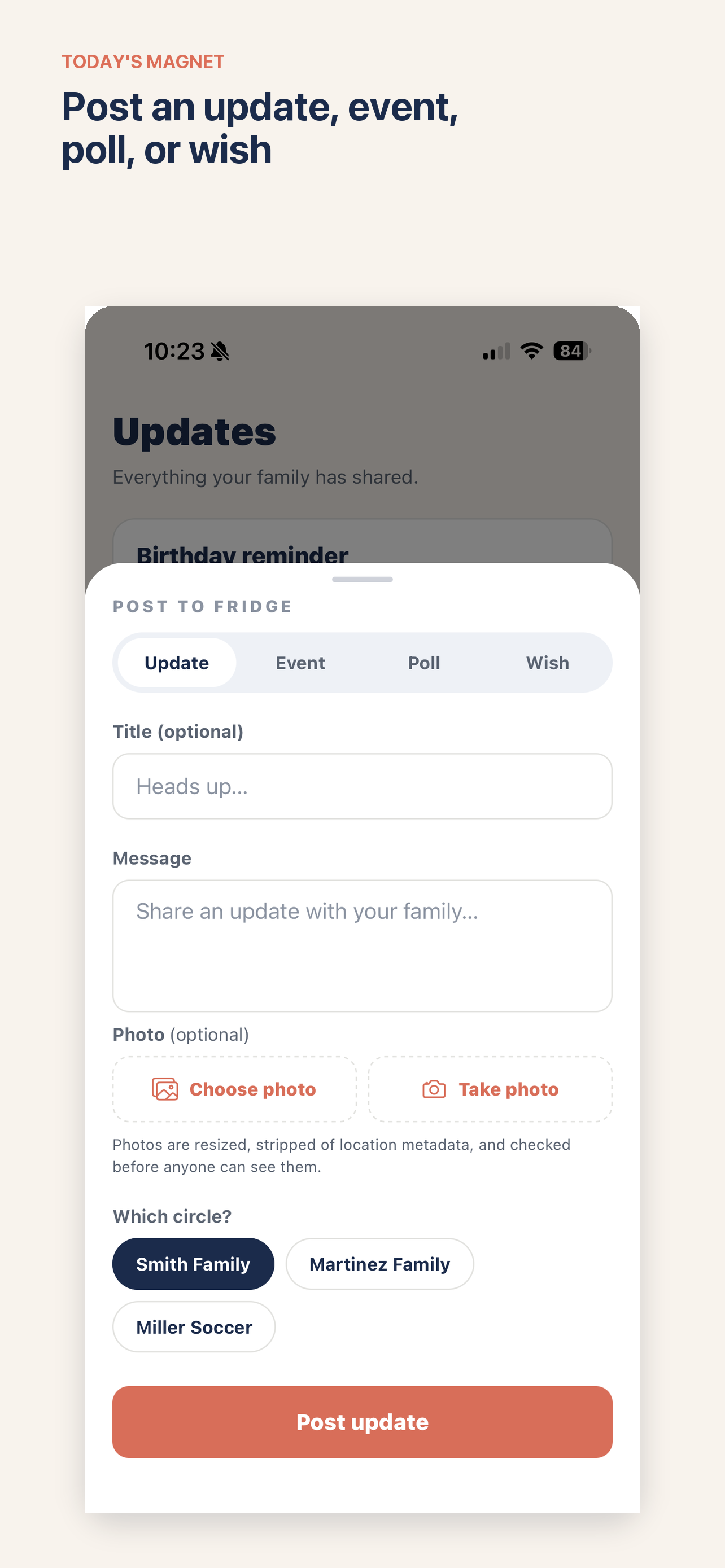
family circles: sub-groups inside one household that decide who sees each post.
circles are the feature. everything else rides on them.
next.js, supabase with full rls, vercel and resend. codex sped up the build.
What I built
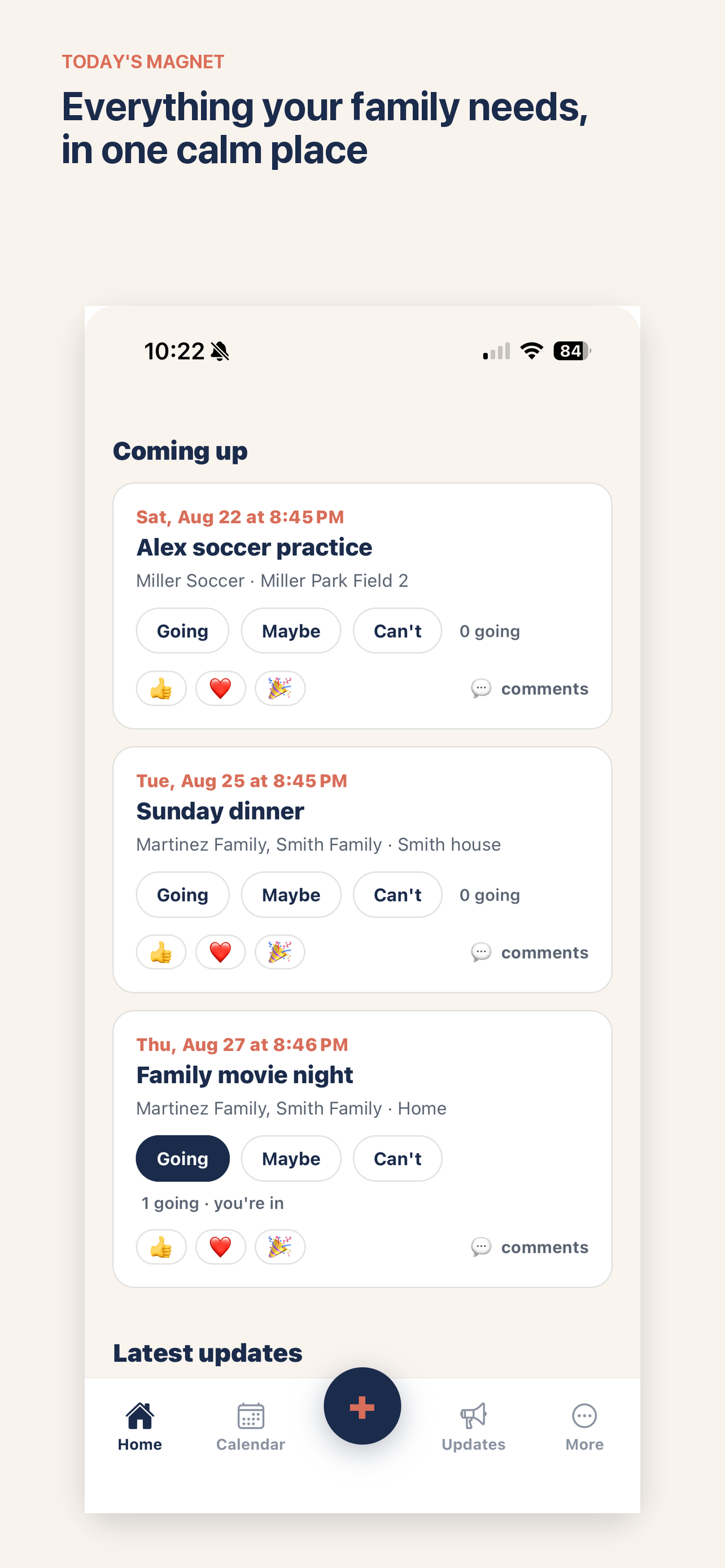
Today’s Magnet is a private family coordination platform built around the concept of a household as a “fridge” — a shared space where families post events, announcements, polls, and wish lists, with privacy controlled through family circles that determine who sees what.
- Households — each household is its own private space. Members join through invite links, not open registration.
- Family circles — sub-groups within a household. An event posted to “Smith Family” doesn’t cross to “Martinez Family” unless you want it to.
- Events with RSVP tracking, reactions, and comments
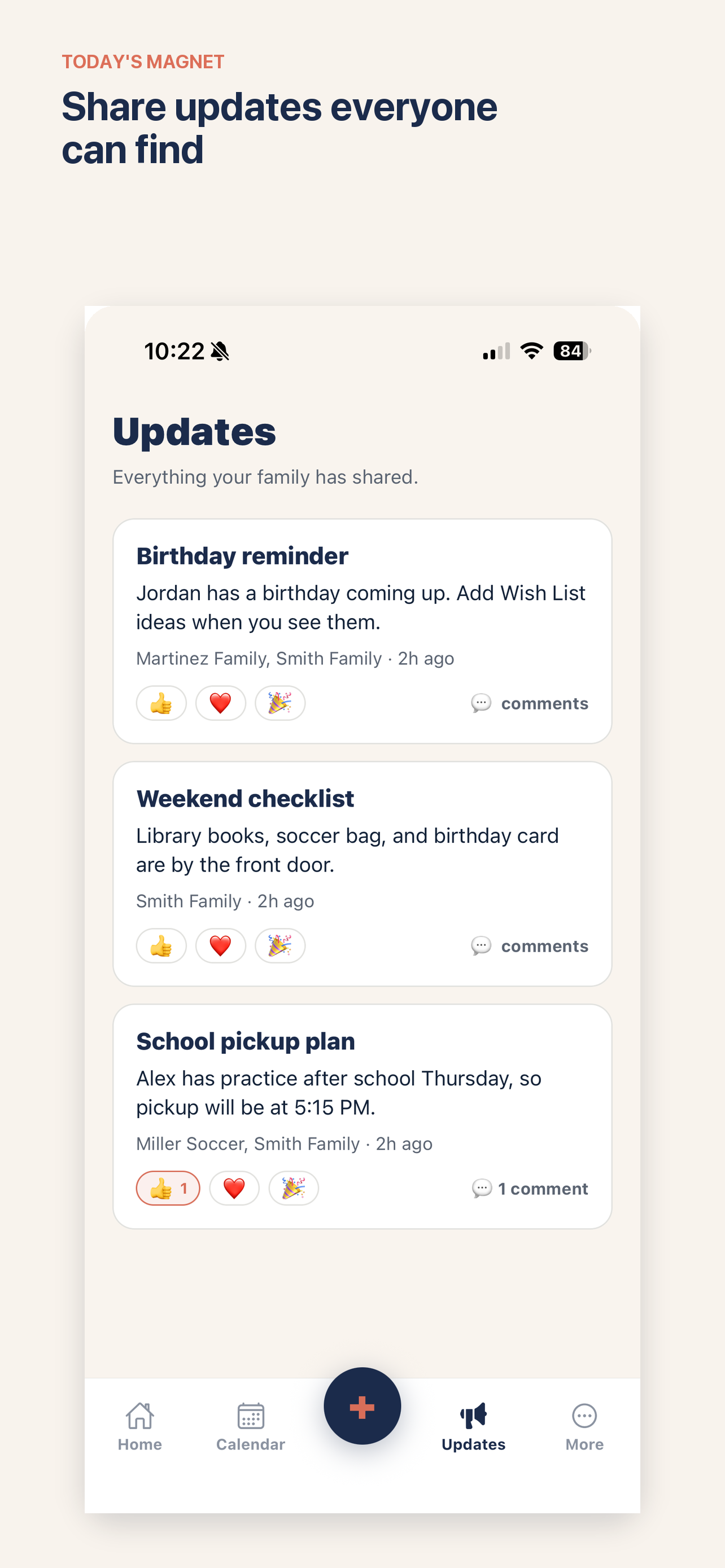
- Announcements for updates that need to reach the right people fast
- Polls for decisions that need a vote, not a thread
- Wish lists for gift coordination without the awkward “what do you want?” text
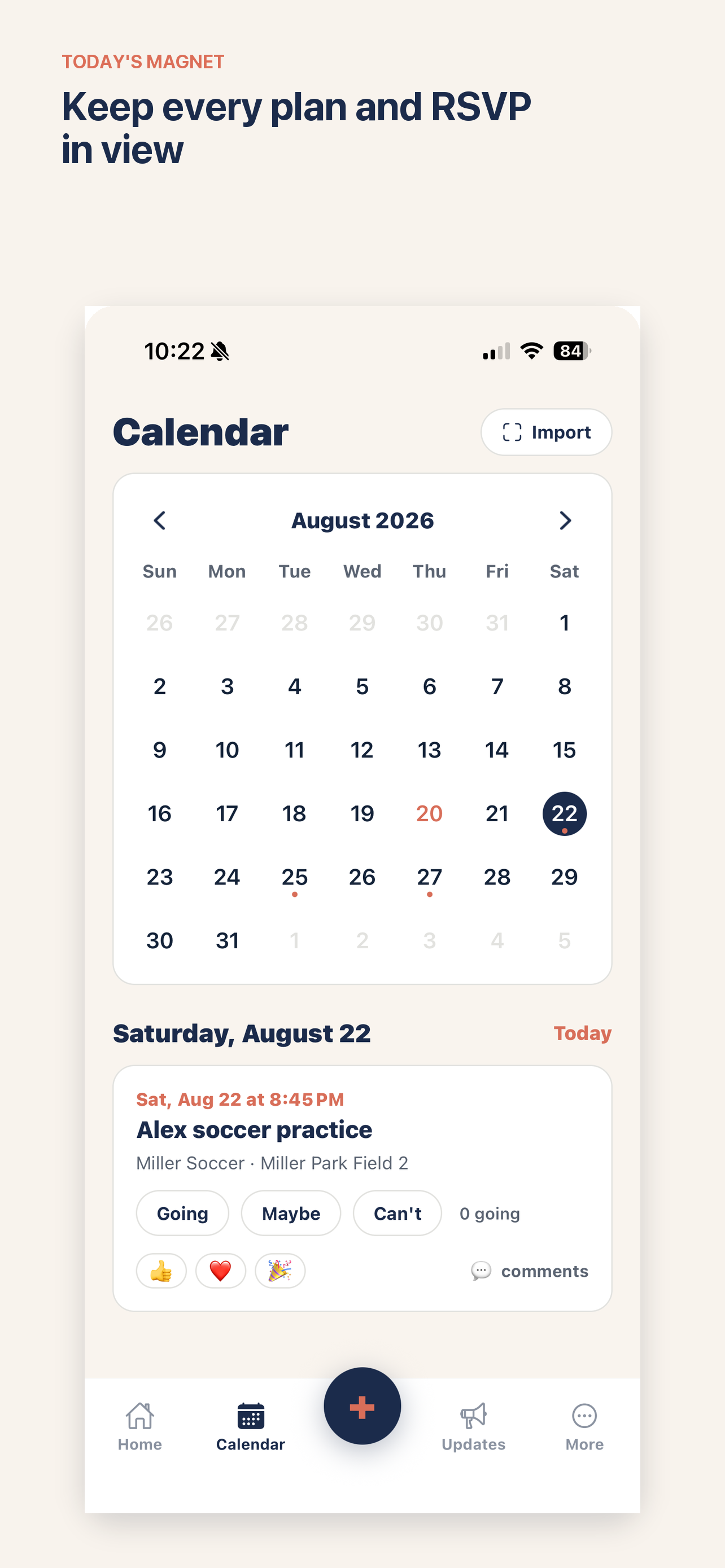
- Shared calendar with per-circle filtering
- Notifications via email (Resend), with cron-based scheduling
- Audit logs for household admin visibility
- Public calendar sharing for circles that want to share outward
I started the build in Base44, a no-code platform I’d used for earlier projects. I hit a wall fast. Base44’s built-in auth couldn’t handle the security complexity Today’s Magnet actually requires. Households need true row-level security. Circles need scoped access. A managed members model — where kids or elderly family members are added without their own accounts — needs a permission architecture that no-code auth simply can’t provide cleanly.
So I made a deliberate decision: rebuild from scratch on an owned stack. I migrated to Next.js, Supabase (with full RLS policies), Vercel for deployment, and Resend for transactional email. I used Codex to accelerate the build. The migration wasn’t just a technical upgrade — it was the moment I stopped building inside someone else’s constraints and started building to my own spec.
inside the app
the real product: the family fridge in action, from the events feed to the circle controls.
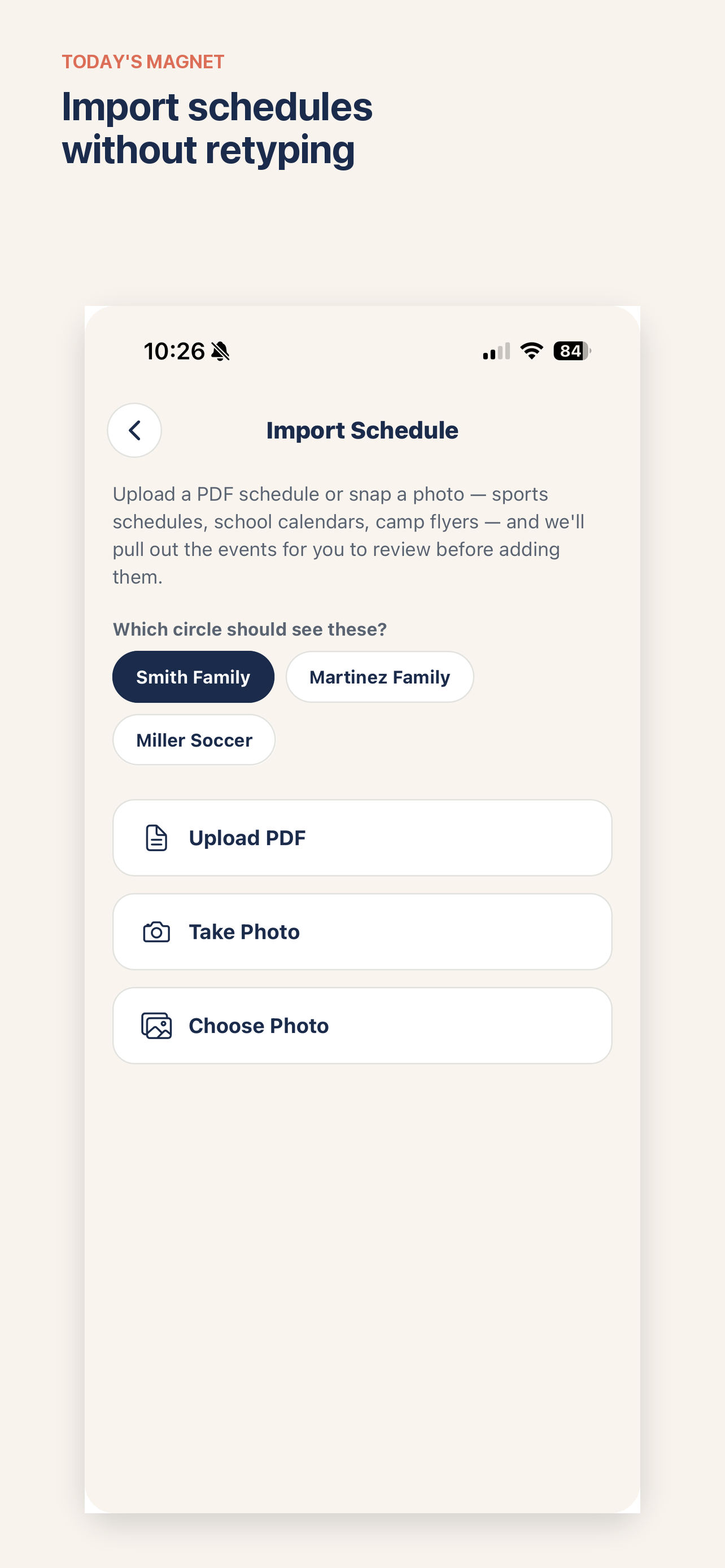
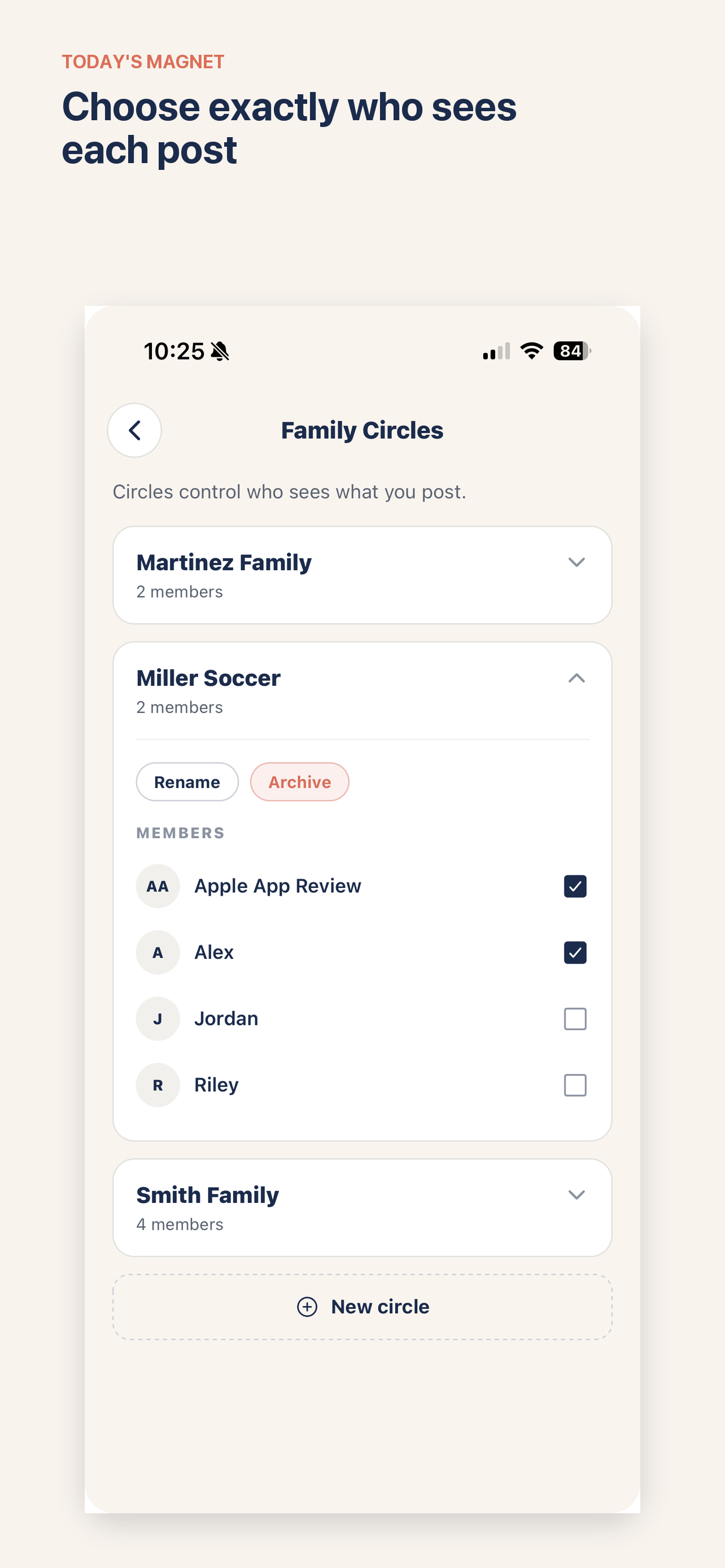
rls policies: intricate. the fridge: calm.
the test for every feature.
What I learned
Deep backend complexity and surface-level calm.
The biggest lesson was about the gap between security complexity and user experience simplicity. Getting row-level security right in Supabase — scoping data correctly across households, circles, managed members, and roles — was the hardest technical problem I’ve worked on as a builder. The policies are intricate. But the end user should never feel any of that. They just see their fridge.
Holding both of those things at once — deep backend complexity and surface-level calm — is the real design challenge. It’s not enough to build something secure. It has to feel effortless to someone posting a soccer schedule at 7am before school drop-off.
I also learned what it means to outgrow a tool deliberately. Leaving Base44 mid-build wasn’t a failure — it was the right call at the right moment. Knowing when a constraint is a limitation versus a forcing function is a skill I didn’t have before this project. Now I do.
And building for a real, specific person — my sister-in-law — kept me honest. Every feature decision had a test: would this actually help her? That’s a better filter than any product framework.
the feature that removes the last friction.
free for one household. paid when you grow.
Where it’s going
Today’s Magnet is currently in private testing with a demo household. The roadmap from here:
- Native iOS and Android apps — the web app works on mobile, but this product deserves a real app. Push notifications, home screen presence, and the experience of opening your family’s fridge from your lock screen are all on the list.
- Flyer scanning — a two-step OCR pipeline (Google Cloud Vision + Claude API) to photograph a school flyer and automatically create an event. This is the feature that removes the last friction from family coordination.
- AI throughout — I’m deliberately leaving space for AI to play a role as the product matures. Smarter digests, automatic event suggestions from patterns, natural language to create posts. The surface is right for it.
- Monetization — free for a single household, paid tiers for multiple households, larger circles, and storage. Straightforward value exchange.
- Broad availability — when the testing phase closes and the native apps are ready, Today’s Magnet opens to anyone with a family.